Who Am I?
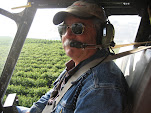
- Bob Barbanes:
- A nobody; a nitwit; a pilot; a motorcyclist; a raconteur; a lover...of life - who loves to laugh, who tries to not take myself (or anything) too seriously...just a normal guy who knows his place in the universe by being in touch with my spiritual side. What more is there?
27 November 2006
Tropical Weather
What the hell is this? A sunny morning? Heh - almost forgot what the sun looks like, it's been miserable for so long. It's been over a week that we've had nothing but cloudy, chilly days with rain every day. This morning dawned beautifully clear. But shortly after sunrise the clouds started moving back in - from the north, dammit. And it's still blowing like crazy out there. And as I write this, looking out the window I can see that we've already progressed to the "mostly cloudy" stage. Oh well. I want my summer back.

23 November 2006
I Lost The Dang Boat
I was going to write about how lousy our weather has been for the last week. Horrible. More like Seattle or London than a tropical Caribbean island (is that redundant?). It's the rainy season down here. Rainy, it is. Windy, too. And chilly, which I hadn't expected. Down in the upper 60's. What are you, kidding me? I didn't bring clothes for this. And I mean *no* long-sleeve shirts, much less a sweatshirt. It's 18 degrees latitude fer cryin' out loud.
I was going to write about how depressed it makes me...about how I need sun and sand (and rum) for my mental health.
I was going to write about the American holiday of Thanksgiving. Hondurans obviously don't celebrate it, and I was a little bummed about not being able to be up in the States to be with friends and/or family. But a couple of other kind and good ex-pats invited me over today for dinner. How could I refuse!
Sharon and Mike Jones are former CIA agents in exile or hiding I think, either/or. Anyway, they have this gorgeous house on a lush hillside not too far from town (the Cay). And boy, do they know how to entertain! They always put on these incredible spreads. You never leave Sharon's table hungry, believe me. This time it was traditional Thanksgiving dinner with all the trimmings. And she outdid herself this time.
Thanks to Mike and Sharon I am beginning to develop something of a social life here. I've gotten to meet some of the other interesting and colorful local transplants who inhabit this crazy place.
As usual, I stayed behind drinking after all the other guests had left. Not a great idea, since although I had planned on hitching a ride in someone else's boat, I ended up taking my own. But I do this. I find that I can get comfortable in just about any surroundings now. And maybe that is the whole secret key to life: Get comfortable, wherever you are. If you can do that, life's a beach. But it must be said that Sharon and Mike's place is an easy place to get comfortable. Relaxing on their wrap-around deck with a fresh rum and coke or a cold Salva Vida beer is good livin' indeed.
It was nearly sunset when I finally made my way back down the path to their dock...the dock where I had...parked...the...where's the fookin boat?! I wasn't even that drunk. I was being good; just a little beer, a little wine, a little more beer, a little rum - certainly not drunk enough to misplace a boat. But sure enough, it was gone. Funny thing was, when the other guests had left just an hour or so before, my boat was still there.
Now I'm freaking. We had maybe twenty minutes of daylight left. So time was definitely not on our side. We jumped in Mike's boat and headed out. "Which way?" Mike asked. "Give me a heading." Me? Like I know? There were a couple of bumps on the horizon which also happened to be downwind, so we headed that way. But did the boat drift downwind or down-current? We're driving along and I'm thinking, This is not good. Mike was confident that we'd find it quickly.
I'll cut to the chase: We found the boat quickly. Nobody had stolen it. It was just floating there, bow line still attached, having come undone from my un-nautical knot. I jumped in and roared away. Made it back to our cay at last light. Close.
So tomorrow I'll get someone to teach me the various knots boaters use.
In the end, I just decided to write about how much I have to be thankful for this Thanksgiving.
19 November 2006
The People Of Guanaja: Pt. 1
In many ways, the island of Guanaja is a place that time has passed by. People here generally only have an elementary school level education, if that. They do not have driver's licenses and do not drive cars (chiefly because there are no roads). They have few technical skills or even technical knowlege for that matter. They do not bowl, nor golf. Many don't even swim! They are not computer literate. Those young ones who do know how to get online generally have to do it at a couple of internet cafes on the Cay.
But they have discovered cellphones. Boy, do they love their cellphones!
Because there is no such thing as billing-in-arrears down here, virtually all cellphones are pay-as-you go. You buy cards in various denominations and then talk until the card runs out. None of the phones tells you how much time you have left. You have to call a number that tells you. Nobody does that. What happens is, you go to make a call and a Spanish lady tells you that you don't have enough lempiras. If you have another card, you put it in. If you don't you're out of luck. Very inconvenient. (Smart ones always keep a fresh card in their pocket.)
Cellphone etiquette is something that has totally eluded and evaded the people of Guanaja. They seem to believe that if you have a cellphone it is their God-given right to be able to get ahold of you (and be gotten ahold of). My employees seem to think that they can call me anytime, day or night, seven days a week. My company phone has rung at 11:15 p.m. Do I pick it up? Hell, no. Most of the time, I don't even answer it on weekends. If people cannot for some reason reach you, they get all indignant and uppity when they finally do.
"I tried to call you FOUR times!" they'll complain angrily, as if I was obliged to take their call. Heh.
"Yeah?" I say. "That's too bad." Unapologetic but not rude.
They'll press the issue: "Was your phone off? Isn't it working?"
I say, "No, it's working fine," without further explanation. It freaks them out. They take it personally.
This absolute right-of-contact has a dark flip-side: They simply cannot *not* answer their cellphones. It is impossible for them to let a call go to voicemail if they can absolutely avoid it. The end-result is rather annoying. But it can be humorous, too.
Guanaja is a poor island, and people live well beyond their means, personally and professionally. Some here think we have big, bottomless pockets from which we'll donate money to every cause and company, whether it's a charity or not. We get so many requests for funds that a major part of my job is filtering and prioritizing them before presenting them to the boss. Recently, two ministers from a local church/school politely asked if they could "get together and talk with me." Of course I knew what they were after: Money. I told them to come see me on our cay and I'd try to be here.
We have a big conference table out on one of our decks. It was a beautful day, there was a lot going on inside, so we talked out there. Basically, they wanted about $20,000...as in DOLLARS, not lempiras. As we sat there and they gave me their spiel, one of their cellphones rang. "Excuse me," the minister said, "I have to take this." And he did. He backed his chair away from the table a little, then began chatting. We caught him up when he returned to the conversation. A short while later, the other one's cellphone rang. Sure enough, he took that call too. I was impressed at their blatant and blitheful rudeness. But not surprised.
I had purposely left my own cellphone on a counter just inside the house. I heard it ring (naturally, as I knew it would), but decided against answering it. Daniel, our cook retrieved it and came running outside. "Bob, your phone!" he said excitedly, holding it out for me to grab. I sighed and waved him off. "Just let it go to voice-mail," I said. "There's no call so important that I have to take it right now." Daniel left, looking very perplexed. I was trying to make a point specifically with the ministers, but I think it was lost on everyone.
I cannot single-handedly change this culture's fascination and obsession with their cellphones. But I'll have fun trying.
15 November 2006
I Am An Idiot
Oh yes! Repeat after me: I am an idiot. I let self-proclaimed "experts" tell me what was wrong, and they were wrong. And we lost a day of work because of it. And I know better!
At our marina construction site, we have three Caterpillar products: A D3 bulldozer, a track-hoe (like a back-hoe with dozer-tracks instead of wheels), and a 924G front-end loader. The three of them are almost in constant use. They're amazing machines; together they can move earth like you wouldn't believe.
So on Monday the front-end loader was lifting up our bulk diesel tank so we could do some work on it (hidden behind the white storage building in the picture below). It was just sitting there, idling when suddenly, the huge machine died like the operator had switched the key off. But he hadn't. Puzzled looks were exhanged all around. Panels were opened, and a half-dozen heads and sets of hands started exploring. They seemed to know what they were doing, so I backed off. Hey, what do I know about front-end loaders? Nada, that's what. And I didn't want to appear like the know-it-all boss telling them what to do.
 Our Broken Loader
The guys decided it was a clogged fuel filter, so it was removed. What they did not tell me was that they had no fuel pressure (which meant that it didn't matter whether the filter was clogged or not - it wasn't getting any gas in the first place). I had to leave the jobsite, but I did so with confidence that they'd get the machine running shortly. At the end of the day my foreman reported the bad news: No go. He said that a "little square fuse" had blown.
Um, a little square fuse? You mean a relay?
"Yes, that's it."
The fuel pump relay?
"Yes."
Okay.
Next morning, out of curiosity I asked to see this "fuel pump relay" fuse. Sure enough, it looked like every other small, black, square five-prong electronic relay in automotive use. I asked where it came out of? My foreman pulled a cover off the fuse panel and pointed to the empty slot. So far, so good. On the inside of the cover was a diagram...where they always are...with the location of all the fuses and relays as well as what they are. Nobody had noticed it. A quick glance showed me that the relay they removed was for the...get ready...brake lights. Hmm. Looking over the diagram a little further, I noticed that there was a 10 amp fuse listed as "Circuit 150 ECM." Electronic Control Module. "That one," I said. "Pull it." My foreman did and, sure enough, it was blown. We put a spare in and it blew as soon as we turned the ignition key on. Well there ya go! There's either a dead short in that circuit or one of the components in the circuit has gone bad. Troubleshooting 101.
Needless to say we didn't have a wiring diagram for the loader. Urgent emails and calls to Catepillar went back and forth, and now Wednesday - two days later - I have the wiring diagram and am tracing out that "circuit 150." Only problem is, the wiring diagram is about three feet by four feet. Looking at it on my computer is like examining an elephant through a straw. It ain't easy.
Troubleshooting mechanical things is not hard. What's hard is *not* jumping to predrawn conclusions about what is wrong. Keep an open mind, and start at the beginning. If something stops, before you start turning wrenches, check the fuses first!
So here I sit, kicking myself.
11 November 2006
The Start of Another Typical Weekend
Yet another pregnant woman to La Ceiba this morning. Don't any of the women here have normal pregnancies? This one's water broke yesterday before noon. The doctor on the Cay tried to get her to deliver all afternoon and night with no success. Ergo, we took off at seven a.m. this morning. Uneventful flight both ways. I'm getting used to this route; it's almost like the helicopter can do it by itself. I'm not sure my boss ever anticipated that his helicopter would be used for so many medical flights.
The King Air has gone back to Florida, meaning I have the place to myself for the next two weeks. With the boss and our guests out of town, I usually leave the helicopter in the hangar at the airport. Instead, I just flew back to our cay and left the stretcher set-up installed. After all it is the weekend, and the Saturday Night Machete Fights are still ahead of us.
The King Air has gone back to Florida, meaning I have the place to myself for the next two weeks. With the boss and our guests out of town, I usually leave the helicopter in the hangar at the airport. Instead, I just flew back to our cay and left the stretcher set-up installed. After all it is the weekend, and the Saturday Night Machete Fights are still ahead of us.
09 November 2006
Pleasant Surprises
 Sunset In Guanaja
Seems like all I write about lately are problems - medical ones that require the special capabilities of a helicopter. But I feel compelled to point out that life here is very, very special.
I have a digital camera (doesn't everybody?). But I haven't really been impressed. For one thing, this one doesn't zoom well. For another, being from the old school in which we put this substance called "film" in our cameras, I am frustrated that I cannot mess with the aperture settings and shutter speeds. Not that I was any good at it; it just made me feel better, being the incurable control-freak that I am. Heh- and I still have control. Now, most digital shots I take are "massaged" a bit in Photoshop after the fact instead of before.
The other evening, a couple of our guests and I were on the deck above our boathouse, sharing a beer and toasting the sunset like they do in Key West, Florida. Sunsets down here can be spectacular. Ironically, you can start to take the beauty of this island for granted. Anyway, as the sun sank behind the hills on the west end of Guanaja I whipped out the camera and snapped some obligatory, "throwaway" shots. When I opened the above image on my computer I was actually impressed. No Photoshop massaging necessary. It's my desktop wallpaper now. It doesn't look all that great here in the blog but it's awesome in full-screen. I guess digital cameras aren't so bad after all.
08 November 2006
Medevacs and more medevacs...
TUESDAY, NOVEMBER 7, 2006
The first helicopter medical evacuation flight (“medevac”) I ever did was as a copilot back in 1978 or ’79. This was before helicopters were widely used as air ambulances; there were only a handful of such dedicated aircraft in the country. The company I worked for was routinely called by various agencies, and it was not uncommon for us to rip the interiors of our helicopters out so that stretchers or premature baby “isolettes” could be fitted. We did many flights within a 100-mile radius of New York City.
One afternoon, we were called to go pick up a burn victim at a hospital just up the Hudson River a bit. It was a young guy who had deliberately, for reasons unknown set himself on fire. We got there and sure enough, this guy was burned badly. Some relatives were there, and since we’d come with a large, eight-passenger helicopter, they rode with us to New York Hospital’s Burn Unit in Manhattan. All through the flight, the mother kept talking to her son. “Hang on, John. Just hang on. We love you, John. Just hang on.” It was heart-wrenching. At the same it was pretty disgusting. The smell of burnt flesh is not pleasant; it’s not something you forget either.
I called the hospital a couple of days later to inquire about our passenger. The nurse who answered the phone got very quiet. "Oh yes, John," she said softly. "He, ahh, passed away shortly after you brought him in." You could tell they don't like losing people in hospitals.
So at two o’clock yesterday afternoon the power surged on our island, like it does in those B-movies when the warden nods and they pull the huge hinged-metal switch on the wall that sends the juice to the guy in the electric chair. “Uh-oh,” I said. “That’s probably not good.” The power usually doesn't have problems on nice, sunny afternoons. Five minutes later the power went out completely. Almost immediately, my cellphone rang and I was not suprised. As usual, it was Roger, the head of the local power company.
“Bob, I’ve got a problem,” he said, sounding very, very distraught. “One of my guys got electrocuted. He’s still up the pole – the crew can’t get him down. We’re not sure if he’s still alive. Can you fly him to La Ceiba?” Well, sure. We started prepping the helicopter to receive a stretcher. Our local doctor should have been called to the scene; for reasons I'm not sure of, he was not.
As the minutes dragged on, Roger was getting frantic about why I wasn’t airborne and headed his way. He urgently wanted to get the man, Marcos, to a hospital – any hospital. Remember we do not have one of those in Guanaja. Being the stickler that I am (some would say “uncooperative prick”) I told Roger to make sure that the local doctor saw the man, administered proper first-aid and pronounced him stable for flight. The very last thing I want is for us to snatch-up a badly-injured accident victim and have him die on the 45-minute flight to the hospital because of something basic that was not accomplished on the scene but could have been.
Instead of bringing the doctor to the man (which would have been quicker), they took the man by boat to the doctor. We all rendezvoused at the airport about an hour after the accident. Marcos’ injuries were certainly severe. His right foot was nearly blown completely off. His unbandaged left foot was…well let’s just say that his entire skin looked like it had been deep-fat fried. It was not pretty. The doctor checked him over, did what he could (luckily there was no bleeding), administered some pain-killers, started an IV, and we were good to go. Marco was conscious through the whole thing and in quite a lot of pain. I knew that Marco was going to smell bad. Roger warned me, but he did not have to.
 Loading Marcos At The Airport
(Think we've got enough help?)
We made it down to La Ceiba in 45 minutes. The hospital we were headed to has a soccer field adjacent to it. Someone from the power company told them to meet us there with a stretcher. They did. It was like clockwork. I wasn’t on the ground for more than five minutes. Then I hopped over to the airport for fuel. It was getting late and I was cutting it close again. Even if everything went right I’d be getting back right as it got dark.
In America this would have been no big deal, very routine. But it's not like America here, not at all. The Honduran government inexplicably does not allow emergency flights directly to hospitals by civilian aircraft operators, and I am aware of this. When I shut down I was met by two obviously-pissed airport authorities who lectured me sternly. “In the future, you must come to the airport,” they said. “We can have the ambulance meet you here.” Outwardly, I was all, “Oh no, sir. No, sir! I’ll never do that again.” Inwardly, I was like, “Yeah right, blow it out your ear.” There’s an expression: Sometimes it’s easier to ask for forgiveness than permission. (Just please, dear God do not let them read this.)
So. Nine weeks, nine medevac flights. It’s funny. I’ve never really wanted to be an air ambulance pilot. But it seems like it’s all I do down here now.
WEDNESDAY, November 08, 2006
Roger called from the hospital. Marcos is still in really bad shape. During the night, they had to amputate his left arm and right leg. They’re still trying to get his internal organs functioning again. It is touch-and-go whether he will even live.
Subscribe to:
Posts (Atom)