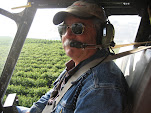
Who Am I?

My photo
A nobody; a nitwit; a pilot; a motorcyclist; a raconteur; a lover...of life - who loves to laugh, who tries to not take myself (or anything) too seriously...just a normal guy who knows his place in the universe by being in touch with my spiritual side. What more is there?

30 August 2006

The ''Home'' Stretch...

Picture it: Sunday afternoon and we are racing across the Yucatan peninsula so that we may leave Mexico and arrive in Honduras before sunset. Bart's plane leaves early Monday morning and he must be on it. No time for sightseeing or pleasantries with the local constabulary - we need to keep moving!

Our original plan was to depart Chetumal, Mexico, then head south down the coast of Belize awhile to a predetermined waypoint. From there we'd turn southeast toward the island of Roatan, Honduras, minimizing our overwater flight time. But nothing on this trip had gone according to schedule; why start now?

Straight line, it's about 160 miles or so from Chetumal to Roatan. There are some reef islands along the way, but we had no idea if they were big enough to land on, should the need arise to take on more fuel. Biting the bullet, we headed off on a direct-to course. We felt pretty safe, what with our life jackets, flotation-equipped helicopter, and the personal emergency beacon that we'd bought that would send a distress signal up to the satellites at the touch of a button (two buttons simultaneously, actually).

We knew that we had to achieve a groundspeed of about 100 knots to make the flight with comfortable fuel reserves. Pushing the limits is one thing when there are plenty of good areas on which to land and put in more gas. But you can't exactly do that over open water.Don't know if you can read the GPS screen, but it's showing nothing but blue outside the windscreen, with 83 miles to go and a groundspeed of 99 knots.

My previous Gulf of Mexico allowed me to make this flight without too much uneasiness. Difference being, in the "GOM" I always had "flight-following", i.e. someone watching over me and watching for my reported arrival at the destination. Crossing from Mexico to the Bay Islands of Honduras, we were really on our own. People were expecting us, and knew to come looking if we didn't show up, but Bart and I knew that if we went down in the water we'd probably be there overnight until the cavalry came. We hoped there weren't too many sharks down there.

We made Roatan with fuel and time to spare. Of course the issue of my expired passport came up again. This time, they just confiscated my old one and told me to bring the new one in when it arrived, have a nice day.

A huge welcoming committee met us at the heliport when we landed. Bart gave the landing to me, for I am familiar with landing on small platforms and could do it more smoothly and quickly than he (0r so he thought). Nobody wants to look like a newbie in front of friends and family. As it was, the floats completely blocked any view of the platform helideck. I took a stab at it and just plopped it down. Luckily, we did not fall off. Here is a shot of our island. The helicopter is on final approach, and you can just barely see the wooden pad at the near end of the island and the plant-lined walkway leading out to it. Here is another shot of the island with the heliport barely in view at the very left.Finally, here is a shot of the bird on the deck.And so we're here. Time to unpack, settle in and relax from a long, strenuous trip. Right? Wrong. No rest for the wicked, Monday would be a regular work day, and there is plenty of work to do.

So much for my vacation in tropical paradise! Now the fun really begins.

27 August 2006

Ahh, Mexico!

After the trouble we had in Brownsville, Texas we were eager to get going and through Mexico. We had lost a day, but figured that the worst was behind us. Well, you know how optimists can be...

We had availed ourselves of the best information we could gather from both the AOPA and the Bush Pilots Association. We had gone over all the requirements; dotted every "t" and crossed every "i". Twice. And then again. Just to make sure, I re-read everything prior to departure from Brownsville.
One of the items the AOPA said was required was a permit to fly in Mexico. A fax number was provided. I raised the question, and my copilot/flight-planner Bart held up a hand. He assured me that he had spoken to a pilot/friend who'd flown through Mexico before, and he had spoken to "Mexico City" and everyone assured him that this "permit" was no longer necessary. Well of course it was. And is. As we were soon to find out.

But we had one other small matter to deal with when we landed in Tampico, Mexico to clear Customs: My passport was expired. Oh, I'd had it renewed of course. But they sent the old one back with the new one. I stuck the "new" one in with my pilot docs- or so I thought. The real new one inadvertently went into my personal file. Hey, they look exactly the same (except for the picture, of course). When the Customs guy in Tampico opened my passport and I saw that picture of a *much* younger me, his eyebrows raised and my heart sank. Shit! I explained this as best I could in my broken high school Spanglish. Senor Customs man laughed and issued us two tourist visas anyway.

From there we went to the office of the airport "Comandancia." His first question: "May I see your permit to fly in Mexico." I looked at Bart; he looked at me. We tried to explain what we'd heard, but the Comandancia stood firm. We had screwed up; now the only thing we could do was return to Brownsville. Shit! Again. We knew enough to not argue. We just acted contrite and dejected. The Comandancia toyed with us for a little while, but eventually produced the necessary permit. Afterward, we concluded that he just wanted to see how we'd react- whether we'd turn into "ugly Americans" or not. We did not. We tried to not show that we were pressed for time and in a hurry, although we were, big time. We were just polite, friendly, and we smiled a lot. And it worked. (Whodathunkit?)

All through Mexico, everywhere we stopped, we met friendly, helpful people who seemed genuinely interested in our trip and our helicopter. Most chuckled at our weak Spanish, and made every attempt to communicate with us in English. We considered ourselves very fortunate.

And Mexico itself was a surprise. Our t.v. image of Mexico is that of a hot, dry, dusty place, made up mostly of desert and populated by sombrero-wearing, burro-riding hombres with big mustaches. Instead, what we found was a beautiful coastline, absolutely deserted for miles and miles and miles, occasionally dotted with quaint, isolated towns and the odd (and seemingly out-of-place) resort. If we'd had more time, we would have landed and taken advantage of the remoteness. Unfortunately, it was not possible. And in any event, with my luck if Bart and I had landed and shut down, the ship would have refused to start again. Once though, we had to take advantage of the deserted beaches when our time enroute due to headwinds turned out to be longer than the fuel range of the helicopter.We landed and put in ten gallons of "spare" fuel we carried just for such an eventuality. (We left it running.)

But Mexico really is surprisingly beautiful. We kept looking down and going, "Damn! Looks more like Ireland or Scotland than Mexico."...Verdant, rolling hills, lush, tropical rainforests....Even Mayan ruins! Needless to say, we were impressed.

The most direct route to our destination would have been directly through Belize. But we had been warned that clearing in and out of Belize could take hours and hours and hundreds of dollars. Instead, we were advised to go to Chetumal, which is to Mexico as Brownsville is to Texas: the last stop. Can't say we saw much of the town, as we were there only long enough to get fuel and clear out. But as we had come to expect, everyone was friendly and helpful.

Chetumal was one of two stops at which we'd been greeted by a cadre of armed military men with mean-looking German Shephards. The men (boys, really) checked our docs and the dogs sniffed around the bird.

At the other stop (Ciudad de Carmen), there was a gaggle of Eurocopter products used in the Mexican oil industry support. Their pilots and mechanics swarmed out to pore over the FH1100, as none of them had ever seen even a picture of one before. They were all taking pictures with cameras and cellphones. But when Bart raised his camera to take a picture of them, the military kids barked, "NO PEEKTURES!" Not for us, anyway. Ah well...

Our transit through Mexico was a pleasant surprise. Both Bart and I wished we'd had more time to meander and explore and stay longer. And we vowed that one day we will. But time pressed, it was getting late, and we still had a long way to go before Honduras.

22 August 2006

Our Story So Far...

The time to leave came. Oh, and it was hard to say good-bye, let me tell you. But finally, the owner's son (almost-a-pilot) and I headed for my new home. We had discussed shipping the FH1100 down on a boat, but in the end we decided to just fly it down. I wasn't exactly crazy about the idea, but hey, it surely would be an adventure!

We left early, making one last stop at the FH1100 plant. *Somebody* (a mechanic) had removed the pouch containing the Airworthiness Certificate/Registration and *somebody* (me) forgot to check. Oops. Sadly, it would not be the only "oops" of the flight.

We struck out westbound, through Louisiana and over to a planned fuel stop in Galveston, Texas where we (meaning: I) made a big goof. Scholes Airport has always, to my knowlege been uncontrolled. We had a Houston section chart onboard, but we were navigating off of an old Gulf Coast WAC chart (larger scale, less map folding). The WAC chart showed Scholes as uncontrolled, as did our not-updated, VFR GPS. We made all the right radio calls on the very wrong frequency. Fortunately, there was no other traffic. On short-short final, the radio crackled alive. "Helicopter Three Four Whiskey, Galveston Tower."

Galveston tower? Uhh, go ahead. "Sir, didn't you know that Galveston has a control tower now, and HAS HAD one since..." Well, shit, no I did not. "Can you copy a telephone number?" Well I guess I can! So we go into Operations and I make the dreaded phone call: "Hey tower, this is the dumbass helicopter pilot." The supervisor chuckles and we "chat" awhile. He reads me chapter and verse of the FAR's (of which I'm quite familiar, thank you, but go ahead anyway). He does not ask for my name or certificate number, thank the Lord. (I file a NASA report anyway.)

After fueling body and helicopter, we head out again, following the Texas coast southbound. We pass over South Padre and Matagorda Islands. It's pretty, but it's a lot like home: barrier islands and slightly swampy mainland. Only they let you drive on the beaches in Texas, evidently. And camp right on the beach too!


It is only when we get south of Corpus Christi that the land begins to resemble our preconceived mental image of "Texas." Check out the image above of a ranch out in the middle of nowhere. Texans sure are proud of their state! Who else buy small-plane pilots would ever see that?

Then the fun began. The Secondary Hydraulic caution light illuminated, telling is that one of the hydraulic systems had lost pressure. Luckily, the FH1100 has two. The light had been flashing intermittently, so I wasn't sure if it was a light malfunction or if the system had really quit. In the air, there is no way to tell. (By the by, it is almost never a light malfunction.)

So we land in Brownsville, Texas and shut down for fuel. Imagine my non-surprise to see the tailboom coated with hydraulic fluid. Sliding the cowling back, we confirm that the #2 hydrapak indicator is showing "Empty." Greaaaaaaat.

That's 34W, our broken bird on the ramp in Brownsville.

Brownsville, Texas is about as far south as you can go in the U.S. and still be in the U.S. Yes, I know that Key West lays claim to the "southernmost point" but who cares? We're in Texas now, not Florida. Thing about Brownsville...it is a hole. A serious shithole. It had taken us just over seven hours to get there. We were fairly tired and very thirsty, so we checked into a nice hotel (meaning: one with a bar). We'd attend to the problem en la manana.

Turns out it was the pressure switch that had failed internally. The local mechanics at the Hunt Pan Am FBO were really nice and tried their best to help us out. But no matter what we tried, nothing would stop hydraulic oil from squirting out just as soon as the pump started turning. Only one thing to do: Wait for the a new pressure switch. Which we did. Which set us a whole day behind schedule. What started as a leisurely trip now became cramped for time. I had wanted to land on a deserted stretch of Mexican beach and go swimming. Now, it did not look like it would be possible.

Long story short, the factory FedEx'd the part to us, it arrived Saturday morning, and we were on the road again by noon. Brownsville is so close to the Mexican border that we crossed into foreign airspace almost immediately. We flew southbound cautiously, wondering what else was going to go wrong? Little did we know. Mexico almost turned out to be more than we bargained for. We came so close, so many times to having the trip really screwed up. But by some strange combination of fate/luck/providence, we kept squeaking by. But that's getting ahead of myself. Mexico will have to be a whole 'nother post.

13 August 2006

Going-Away Party

So we three went out last night- me, Matt and his future wife Alicia. Supposed to be my "going-away" party, I guess. But I gotta tell you, I wasn't in a very festive mood. I'm so ambivalent about this new job. Everyone is acting like it's going to be a big vacation in paradise, but it'll be far from that. For one thing, it's work. For another thing, I'm leaving the town and the people I love for a minimum of two years.

So we went to the Seville Quarter here in Pensacola, one of these places that has multiple bars and multiple bands. Matt and I like live music, and we'll sit through the worst garage-level cover-bands if we have to. So far, we've only walked out on a few. On the other hand, we've seen/heard some really great live music being made. The three of us parked ourselves at a table in a big room- a former warehouse-turned-bar, complete with lasers and disco lights. The band was one step above going-through-the-motions. You could tell they'd played all of these songs many, many times before. We hate that. On the other hand, it must suck to be in your 30's and knowing that your "big break" ain't coming anytime soon and you're destined to playing other people's music for drunks in smoky bars for the rest of your life.

And smoky, it was. Tables with gaggles of young girls, all with cigarettes dangling out of their mouths and veritable mushroom clouds of smoke billowing above. Just something so unattractive about smoking women. Do they think it makes them look sophisticated and sexy? Just the opposite. For me, at least.

Alicia wasn't in the best of moods; a friend of hers had recently died. Matt and I were somber. We've been friends for a long time. He's been my best travelling/copilot/camping/canoeing/hiking/amusement-park-going/pool-playing/drinking buddy. So what did we do? Drink, of course! I was nursing my usual Rum and Cokes. Matt was downing his Long Island Ice Teas (yikes!) at an incredible rate. How he drinks those things I'll never know. But then, there was a time when I drank only tequila, and lots of it. Bad times, those. God must really protect drunks, because He saw me safely home many a night when I probably should have been in jail. Or dead.

My previous heavy drinking days must be catching up with me. Sometimes I can have a couple of glasses of wine and get a nice buzz going. But as many drinks as I had last night, I didn't even get buzzed. "Buzzed" is usually what I aim for. And usually I go blowing right past that to commode-hugging-drunk. Hey, what can I tell you, I like to drink. But last night I might as well have been drinking straight Coke. Would've been cheaper, anyway.

So it wasn't exactly the high-spirited, celebratory night we'd hoped. I know I should be happy about this new episode of my life starting, but I'm not. I've made a nice little life here in Pensacola. I wish I could walk away cleanly, but I can't.

01 July 2006

A Pilot Looks At 50

Apologies to J. Buffet...

So, ever since I was a kid I've had blood pressure issues. From my very first flight physical exams the doctors were always warning me about it. "You better quit smoking," they'd sternly advise, although I had never even started. Maybe some people just have naturally high blood pressure. Or maybe my arteries are about to pop like party balloons, who knows. Anyway, one flight surgeon suggested that I needed to go lie on a beach and drink grapefruit juice for a living. I was in his office at Kennedy Airport in New York City at the time, where the helicopter I was flying was based, about as far away from a peaceful beach as one could imagine.

Long story short, I eventually find myself living in Pensacola, Florida. We have absolutely gorgeous beaches here and yes, I like to go out and lie on them. One day, I found myself out there, drinking grapefruit juice of all things, when I got that little shiver of deja vu. Like, wow, man- just what the doctor ordered. Only it hadn't helped my blood pressure much. Not high enough to need medication, mind you, just high enough to give them concern.

Okay, so for the last five years I've been working for this guy who is trying to resurrect the FH1100 helicopter. It's been tough...tougher than we ever imagined. There are a lot of obstacles in our way. But the potential payoff is tremendous. Even if we only produced twenty or so helicopters a year, we'd be sitting pretty. We're not out to crush Frank Robinson; we just want a small slice of the five-seat, single-engine, turbine helicopter pie- a pie which is still quite large.

But one can only wait so long, and I've reached the end of my rope. Sadly, it's time to go. I hate leaving, when we seem so close to success. But it has seemed that way before. What kept me going back every day was the possibility that just one of the deals I was working on would go through. I mean, they couldn't all be duds, right? Well, so far... So how long to you keep at it? If you're like my boss, the owner of that company, quitting is simply not an option. But the rest of us have that option. And I exercised mine.

A guy we know - a successful real estate developer - owns a little house down on an island down in the Caribbean. Actually, he owns the island the house is on too. But the island isn't big enough for an airport, so he has to land his corporate plane on a nearby island and take a boat over. He was a helicopter pilot in Viet Nam, so he bought a helicopter to use instead of the boat.

This guy is developing property on these so-far-undeveloped islands. The idea is to turn it into a resort for rich Americans. It will undoubtedly be a success. There are up to fifty-five employees working at any given time. Since he is not down there full-time, he needs someone to manage operations in his absence. This is where I come in. The job requires actually moving out of the U.S. for the next two years. But the salary/benefits are tremendous. It was truly an Godfatheresque "offer I couldn't refuse."

One of my responsibilities will be to keep the helicopter at the ready for when he's "in town." When he's not, I get to use it. How sweet is that! But I don't kid myself, this will be no vacation (although all my family and friends think it is). I suspect there will be sufficient time for lying on a beach and drinking grapefuit juice. At least I hope so.

It's sometimes hard to leave one job for another. Leaving PHI was relatively easy. After 13 years, it was way past time to get out of there; I had waited too long while working on getting the union in and the contract negotiated. But leaving FH1100 Manufacturing is incredibly hard. I have really enjoyed my job and the people I've worked with. More than that, I've enjoyed learning about the helicopter from the molecules outward. It has been fascinating to go back in the historical documents and see stuff that was happening even before the ship was certified. Not to mention the pleasure that comes from having real input into design changes in an aircraft. How many line pilots get to do that!

Life goes on. It pushes us forward, sometimes when we're not quite ready to be pushed. We have to learn to go with the flow. I wish my friends at FH1100 Manufacturing nothing but the best. I wish for them unbridled success. And I regret that I will not be there to share it. What happens when my two-year committment is up? ...I'm not quite sure. But I'll let you know when I get there.

03 June 2006

Flyable FH1100's!

We had three...count 'em, three flyable FH1100's on the ramp Friday. It was a momentous occasion. One was a customer's ship that was in for a little maintenance work. The other two are just coming out of refurb. Both need only a few fine-tuning flights and they're good to go. I don't know of the last time there were three flyable FH1100s in the same place, but I would say with certainty that it was a long, long time ago.

The next step will be to get all three in the air at the same time and get some pictures. Stay tuned!

02 May 2006

A Flight School Idea

I've been with this company, FH1100 Manufacturing Corp./Helicopter Technology Inc. since 2001. In that time, we've concentrated on building helicopters. But Georges' son Cedric is here. He did a stint in the Marines, then got out and got all his pilot ratings (fixed and rotor) as well as an A&P. He is eager and enthusiastic and he wants to fly! He's been bugging us to "put a helicopter up." You know...for charter, photo flights, flight training...stuff like that. But Georges and I have done our share of operating helicopters, and we really don't want to do it again. Too many issues, not all of them pleasant, when you're an operator. Too many hassles.

Well one day in January 2006 we were sitting around having a "strategy session," (read: long lunch) when the subject of a flight school came up again. One of them (and I can't remember whether it was Georges or Cedric) suggested doing a flight school, but using the FH1100 instead of a piston trainer. An all-turbine ab-initio flight school? At first the idea sounded kooky.

But the more we discussed it, the more sense it made. First question: Could it make money? Well, who else can operate our helicopter more cheaply? We've been watching the prices that piston schools charge, and they're inching up toward (and sometimes above) $300 per hour! And let's not even talk about the king's ransom Bell charges for their Training Academy. So the first order of business was to see whether it was financially do-able; whether we could offer the FH1100 at a low enough price to be "competitive" with the high-end pistons yet still make money for us.

Secondly, we asked: Why couldn't we start an all-turbine school? People are going to need turbine-time anyway; why not give it to them from the get-go? Let's face it, the vast majority of working helicopters out there (at least, those that are *not* in the training environment) are turbines. Frankie's R-44 is a great personal helicopter, but it is simply not robust enough for serious commercial work. (Not to mention that it doesn't have a proper baggage compartment.)

It's funny how quickly the idea of an all-turbine flight school gelled.

We'll put students through, training them from day one in the FH1100. We'll train them as not just commercial pilots, but Professional Pilots. Nearly anyone can get the rating and proclaim that he can make money as a pilot now. But actually doing it is quite another thing. Since I have a little bit of expertise in this field, our courses will be designed to give the students "real world" experience. My first plan is to write an Operations Manual that all pilots who fly our aircraft must become familiar with and adhere to. It's funny how a lot of commercial pilots just want to go out and do their own thing and *not* follow a manual (or FAR, for that matter).

Another part of my plan is to have an elevated platform so students can get familiar with the kind of pinnacle operations that you find in the offshore environment. I'd also like to do some rudimentary external-load training - not necessarily long-line, but who knows? It would be better than having the customers just burning holes in the sky as they build time for their Commercial Rating.

("My plan," "my plan"...sounds like I'm a one-man show here, eh? Not so. Cedric is running the school, but at least I have some input into what we're going to teach over and above that which is needed for the PTS.)

Once the students successfully get their CFI, we'll hire the best and put them to work teaching others what they've just learned. Once they get up toward 1,000 hours, they'll become marketable and move on, making room for those coming up after them.

An informal market survey told me that there was a huge demand for cheap turbine time. Whether that will translate into paying customers is something that remains to be seen.

So we're going to do it, we're going to be an operator. I am not exactly thrilled. I know what can go wrong. Chip lights or dead batteries at inopportune places...things like that. And I'm not looking forward to it. So I'm hard at work, trying to get us to a point where we are actually prepared to handle the "stuff" that is bound to happen.

The flight school is still in the "building" stage. We're not quite ready to receive students, but we're getting very close. This is the fun part, getting things set up. The next couple of months are going to be interesting indeed.

For more information on our school, you could always contact me or Cedric at the company (
www.fh1100.com). Or you could stay tuned here, where I'll be posting updates and progress reports and behind-the-scenes stuff (like how what we intend to do about the spectre of an - eeek! - overtemp on startup).