Like you (probably), I wondered how this coronavirus could spread throughout the country so thoroughly and so quickly. And never mind the U.S., this thing spread around the globe like the proverbial wildfire!
The Chinese only admitted to the world that they had a problem in December of 2019. Believing anything the Chinese tell us would be horribly naïve. We can safely assume that they were aware of this novel coronavirus "at some time" before December.
My curious, skeptical mind makes me think that this coronavirus was probably in the U.S. waaaaaay before "patient zero" showed up in Washington State. I won't venture to say how long ago, but I'd bet the virus has been here for "a while." I believe that quite a number of people have gotten COVID-19, mistaken it for the flu, and gotten over it already.
WHY THIS IS IMPORANT
When the government publishes a timeline of COVID-19 penetration into our society, they always show us a bell curve graph. The big question is: where does that timeline begin?
Linked HERE in a very interesting article published by a woman who theorizes that the U.S. may already be as much as sixty days earlier in the spread of the disease...that we're already at the "peak" of said bell curve, contrary to what we're being told by the authorities. And maybe we're even past the peak. If she's right, then some of this pandemic panic has been meaningless and unnecessary. Intuitively, I've agreed with she's saying, but I haven't been able to put it into words like she can.
Here in my Florida county, we've been practicing mandatory social-distancing for well over two weeks. My kids think I don't love them anymore. Instead of tucking them in bed and kissing them goodnight (which I always considered to be coddling), now I merely wave at them on the upstairs landing as I sit in my recliner in the living room, drinking my beer, binge-watching "Tiger King" on Netflix and composing nasty emails to their mom (my ex-) in my head.
If what the authorities say is true - that you cannot get COVID-19 simply by breathing the same air as a person who is infected, then we should not be seeing a big spike in new cases. If Walmart employees start showing up disproportionately in the local numbers, then I'll worry.
Out of 315,000 residents of Escambia County, 136 have tested positive for coronavirus. That is .043% - less than half of a tenth of one percent of the population. In other words, a tiny number. In terms of confirmed cases, we're seeing an increase of about ten people per day. Nine people are in the hospital, and only one person has died. Epidemic, you say?
So yeah, the disease is still being transmitted, just not at the huge, exponential rate that "experts" were predicting. Sooner or later we're all going to have to get back to work - restaurants and bars and our beach, etc. will have to re-open. We can't stay on a statewide lockdown forever. And so the virus will continue to spread until we come up with an effective vaccine. If we're already at or just past the peak, that would be a very, very good thing.
Who Am I?
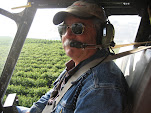
- Bob Barbanes:
- A nobody; a nitwit; a pilot; a motorcyclist; a raconteur; a lover...of life - who loves to laugh, who tries to not take myself (or anything) too seriously...just a normal guy who knows his place in the universe by being in touch with my spiritual side. What more is there?
06 April 2020

01 April 2020
Coronavirus: How Deadly?
On Monday, in an effort to inject some sense of normalcy to this insane world...and to give at least a tiny bit of support to the businesses that are still open and haven't folded yet...my friend, Terry and I drove out to Pensacola Beach for lunch.
We ate at the café NOLA, which serves pretty damn good Cajun food. I had the Nola Burger, which is basically a fully-dressed cheeseburger topped with their crawfish and andouille dip. Oh Lord, was it messy! To say it was fantastic would just not be doing it justice. Seriously, when the airlines start flying again, you must book a flight and come down here and go out to the beach and eat at NOLA. I'll drive...and I'll even buy!
Anyway, the beach was a ghost town. Shops and restaurants are open, but they're dying. There was absolutely no reason that Terry and I could not have eaten at any of the outdoor tables at NOLA. Swab 'em down with a sanitary wipe, and enjoy your food, boys! Nobody could ever convince me that it would be a huge risk. But nooooooo, the tables had signs saying that you could not eat there. So what did we do? Well, we didn't eat there, but we waited at said outside tables while our food was prepared. And who stood leaning on these very same tables before us? Who knows. If they have COVID-19, we now probably have COVID-19. Them's the chances you takes.
So Terry and eventually grabbed our grub-to-go and repaired to the boardwalk where we found some benches that looked out on the bay where we could eat our food and drink our ice tea (sweet tea, of course because, the south!). We felt a little guilty, like we were being major threats to public safety. "We're scofflaws," we laughed. The government has us scared to be within six feet of one another, whether you've got a hacking cough and are sneezing or not. Be afraid...be very afraid!
Let's look at some hard numbers. As of today, Wednesday April 1st, the Pensacola and surrounding area (Escambia County, Florida) had 94 confirmed cases of COVID-19. For perspective, that's 94 out of 315,000 people. If we divide 94 by 315,000, we get .00029 (or .029%). That's a really tiny number.
For clarity, 1/10th (10% or .1) of our local population would be 31,500 people. 1/100th (1% or .01) would be 3,150. 1/1000th (.001) would be 315 people. As I said, with only 94 people ill, we're talking very small numbers....right now.
And so far, nobody here in Escambia County has died. That said, according to some sources, if you're going to die from COVID-19, it generally happens within 14 to 19 days of infection. So the death-rate for the disease will lag behind the infection rate, but it shouldn't lag too far behind - a couple of weeks or so.
I get it that the risk of death from COVID-19 is small. But I also get that we don't want our hospitals (and ICU's) overrun with COVID-19 patients. Thus, all this "flattening the curve" they keep talking about. Without a vaccine, we really are playing with fire. I'm one of those, "I never get sick!" guys - because I don't. But guess what...when they do come out with a vaccine, I'll be one of the first in line to get stuck.
We ate at the café NOLA, which serves pretty damn good Cajun food. I had the Nola Burger, which is basically a fully-dressed cheeseburger topped with their crawfish and andouille dip. Oh Lord, was it messy! To say it was fantastic would just not be doing it justice. Seriously, when the airlines start flying again, you must book a flight and come down here and go out to the beach and eat at NOLA. I'll drive...and I'll even buy!
Anyway, the beach was a ghost town. Shops and restaurants are open, but they're dying. There was absolutely no reason that Terry and I could not have eaten at any of the outdoor tables at NOLA. Swab 'em down with a sanitary wipe, and enjoy your food, boys! Nobody could ever convince me that it would be a huge risk. But nooooooo, the tables had signs saying that you could not eat there. So what did we do? Well, we didn't eat there, but we waited at said outside tables while our food was prepared. And who stood leaning on these very same tables before us? Who knows. If they have COVID-19, we now probably have COVID-19. Them's the chances you takes.
So Terry and eventually grabbed our grub-to-go and repaired to the boardwalk where we found some benches that looked out on the bay where we could eat our food and drink our ice tea (sweet tea, of course because, the south!). We felt a little guilty, like we were being major threats to public safety. "We're scofflaws," we laughed. The government has us scared to be within six feet of one another, whether you've got a hacking cough and are sneezing or not. Be afraid...be very afraid!
Let's look at some hard numbers. As of today, Wednesday April 1st, the Pensacola and surrounding area (Escambia County, Florida) had 94 confirmed cases of COVID-19. For perspective, that's 94 out of 315,000 people. If we divide 94 by 315,000, we get .00029 (or .029%). That's a really tiny number.
For clarity, 1/10th (10% or .1) of our local population would be 31,500 people. 1/100th (1% or .01) would be 3,150. 1/1000th (.001) would be 315 people. As I said, with only 94 people ill, we're talking very small numbers....right now.
And so far, nobody here in Escambia County has died. That said, according to some sources, if you're going to die from COVID-19, it generally happens within 14 to 19 days of infection. So the death-rate for the disease will lag behind the infection rate, but it shouldn't lag too far behind - a couple of weeks or so.
Fortunately, the mortality rate for COVID-19 is remarkably low - at least here in the U.S. But absolute rates are impossible to derive because we don't really know how many people have the disease, because you only get tested of you exhibit symptoms. So estimates are all over the place as to how many people in the country will become infected with COVID-19 and not know it. And without testing everyone in the country, we cannot know the total number of people infected. As my friend Matt astutely says, "We don't know what we don't know. And it's true.
Just because Escambia County, Florida has 94 people who've tested positive for the virus doesn't mean they'll all need to go into the hospital. You might take the number of people who have tested positive for COVID-19, and multiply that by five times to estimate how many people are asymptomatic and never get tested. In our case here in Pensacola, that would mean around 450 people are infected - that's .14% of the people, still a very small number.
But let's be pessimistic! For argument's sake, let's say that one-quarter (25%) of all the 315,000 people in my county eventually contract coronavirus. If that happens, then we'll be looking at 78,750 cases (315,000 X .25). As I said, what we do not know is how many of them will show no symptoms at all.
If the statistics hold, 80% of those people do get infected and do get tested will recover on their own. So if we have 94 confirmed cases here in my county, 75 of them will not need hospitalization. That leaves perhaps 19 people who will! Not very big numbers.
You can drive yourself crazy when you start to crunch numbers. Statistics are funny things; they don't come with guarantees. When it comes to the percentage of people infected, or the percentage of people needing hospitalization, or the percentage who might fall critically ill, or any percentages at all for that matter, the actual numbers will vary depending on the demographics and population density of the particular area.
My friend Matt adds: "How many people die *with* coronavirus versus those who die *of* the coronavirus?" In other words, how many people would have died anyway this week? Right now, every person who dies with coronavirus is shown in the statistics as dying of the disease. And maybe that's not quite accurate.
26 March 2020
Grocery Buying and Fear-Mongering
Yesterday, instead of my usual adventure to Wal-Mark, which used to be a happy thrice-weekly occurrence, I decided to eschew Mr. Walton's Supercenter and hit up the nearby Publix. I mean, sure, Publix is slightly more expensive, but It's such a nice shopping experience! And since I'm not planning on paying my April rent anyway, I figured what the hell - I can splurge, baby! And splurge, I did. Did I say, "slightly" more expensive? Yow! Publix has apparently doubled their usually-high prices to "Cat-5 hurricane's a-coming!" levels.
I was meandering around the (candlelit!) store with the other rich people (and not many of them at that!), sipping on a complimentary glass of wine - a rather nice cab, actually. In the back of the store, the meat section was pretty empty, of course, but I don't eat much red meat anymore. There was *plenty* of ground turkey though, which is fine.
Suddenly, this heavyset, middle-aged woman comes rushing over to a nearby clerk - or maybe it was just a guy in a pale green shirt who looked like a clerk, I dunno. "WHERE'S THE TOILET PAPER?!" she blurted out. No greeting, no "Excuse me," no nothing but her loudly-barked question. How rude! I felt like telling her, "Hey toots, you can just take that attitude to Winn-Dixie!"
With a bemused expression the "clerk" (or whoever he was) politely directed her to the appropriate aisle, and she scurried off. I kind of laughed as I moved on over to the guy holding a tray of free, hot hors d'ourves. I mean, just how much toilet paper are people using?? Is it because as my friend Gene suggests, we're all home, sitting on our butts and just eating more, and therefore pooping more? Maybe!
Publix had everything on my shopping list, so even though my belly was full from the freebie snacks and I was a little buzzed on the wine, I headed for the Bakery aisle to get some (more) snacks. Passing by the Paper Products aisle, I noticed that it was...(any guesses - show of hands?)...right, EMPTY. No paper towels, no toilet paper...no nothing. Now I understood the clerk's bemused expression. (Fortunately I didn't need anything from that aisle.)
I went to the checkout - where I did NOT have to do that myself, thank the Lord! The valet then brought my car up front, and one of the anonymous green-shirt servants carefully loaded my groceries into the trunk. I should shop at Publix more often! Wal-Martz could surely take a lesson from these guys!
You know, it's a good thing that this coronavirus is an upper respiratory disease and not something that affects the bowels or intestines. Then we'd really be up Shit Creek without a paddle, wouldn't we? (Ouch, sorry for that one - I couldn't resist.)
Okay, continuing our grocery shopping theme, on to the meat-and-potatoes of this post! Here in Escambia County, Florida (pop. 315,000) where I live, 19 cases of the coronavirus have been reported. That's 19/315,000, or .00006 of our population. Nobody from my county as died. Our next-door neighbor, Santa Rosa County (pop. 180,000) has had nine...or .00005 of the population. One guy died, but he was in his 70's and had other medical complications.
Out on the west coast, my friend Hal Johnson lives in Redding, California which is in Shasta County which has a population of 177,000. Shasta County has had three reported coronavirus cases; one person has died.
To the above I hasten to add: "So far."
It appears that "COVID-19 2020" is probably not the nationwide epidemic that the government and especially the media feared (and maybe hoped?) we'd have. Is it because of the pro-active steps the government took to cajole us into shunning one another? Probably. The other thing is that we Americans who don't live in densely-populated big cities were already pretty good at "social distancing." And Americans had become pretty much germaphobes already.
Are we completely through with this pandemic? Oh no, certainly not! I'm sure that there are parts of the country that will continue to experience a rapid "community spread" of the virus. I sure wouldn't want to live in New York City right now! But at least the numbers are encouraging...for now.
21 March 2020
Can I Be Serious For A Moment? About Coronavirus, I Mean
I may have done some lighthearted joking around about this coronavirus mess, especially when it comes to what some perceive as the government’s overreaction in wanting all American citizens to “just stay home” for the next few weeks and not do anything…you know…sociable. But I need to be serious for a moment.
COVID-19 attacks the respiratory system. One of the common results is pneumonia. In serious cases, patients need to be hospitalized and put on ventilators that helps them breathe. And let us remember, right now there is no cure…not even a vaccine that can prevent coronavirus! And no real treatment protocol for it, either.
We need to think that through.
Let’s say I get the coronavirus. Now, I consider myself a superhero because “I never get sick!” (he says). But the fact is that I’m 64 and not exactly the picture of health. Let’s say that my lungs - ravaged by years of relentless cigarette and pot-smoking – let’s say they’re affected to the point that I need hospitalization. It’s not a stretch of anyone’s imagination. So I trundle myself off to Sacred Heart Hospital just down the road, where I get admitted and stuck on a ventilator.
But let’s also say that my doctor contracts coronavirus too. And since he’s older and more important to society than me, he needs to be hospitalized and put on a ventilator. Since the number of ventilators is not unlimited, guess who gets the ventilator before I do? It would be a tough choice for any hospital to make, but if I were running the place, even I would give it to the doctor.
Doctors, nurses and health care practitioners are not immune from this coronavirus. In fact, they are even more susceptible to it than you and me, because they deal with sick people every day. I deal with mentally ill people, but so far that's not as contagious as the COVID-19.
THIS is why we need to slow down the spread of the coronavirus…so that our health care system is not overwhelmed by patients with respiratory issues for which the treatment options are so limited.
Below is a short, but pretty scary YouTube video of just what happens when you contract the coronavirus. When you consider the number of people in this country who might get it, and then think about the number of those ventilators and respirators that hospitals might (or might not) have, you’ll understand how very important it is for us to self-quarantine and do what the government is suggesting. I may think of myself as bulletproof, but even Kryptonite can kill Superman. I don’t want to get sick, and I surely don't want our health care professionals getting sick.
COVID-19 attacks the respiratory system. One of the common results is pneumonia. In serious cases, patients need to be hospitalized and put on ventilators that helps them breathe. And let us remember, right now there is no cure…not even a vaccine that can prevent coronavirus! And no real treatment protocol for it, either.
We need to think that through.
Let’s say I get the coronavirus. Now, I consider myself a superhero because “I never get sick!” (he says). But the fact is that I’m 64 and not exactly the picture of health. Let’s say that my lungs - ravaged by years of relentless cigarette and pot-smoking – let’s say they’re affected to the point that I need hospitalization. It’s not a stretch of anyone’s imagination. So I trundle myself off to Sacred Heart Hospital just down the road, where I get admitted and stuck on a ventilator.
But let’s also say that my doctor contracts coronavirus too. And since he’s older and more important to society than me, he needs to be hospitalized and put on a ventilator. Since the number of ventilators is not unlimited, guess who gets the ventilator before I do? It would be a tough choice for any hospital to make, but if I were running the place, even I would give it to the doctor.
Doctors, nurses and health care practitioners are not immune from this coronavirus. In fact, they are even more susceptible to it than you and me, because they deal with sick people every day. I deal with mentally ill people, but so far that's not as contagious as the COVID-19.
THIS is why we need to slow down the spread of the coronavirus…so that our health care system is not overwhelmed by patients with respiratory issues for which the treatment options are so limited.
19 March 2020
Brooding, Introspective Anticipator of Trouble
If you’re like most of us, today is like yesterday, and yesterday was just like the day before. That’s how life is – we plod along day after day, all of them with a certain sameness. Weeks...months...and sometimes years go by without any big changes. Eventually we get into a mental rut in which we assume that tomorrow will be the same as today.
I call it psychological momentum but the eggheads and shrinks probably have an official term for it. Whatever that name may be, the fact is that we develop certain expectations about how our days are going to go. And we are never really, truly prepared when something unexpected and bad happens that knocks us off our feet. Our world sometimes gets turned completely upside down.
In the aviation industry, helicopter pilots are often accused of being paranoid. This stems from a little treatise written by a newsman named Harry Reasoner back in the Vietnam War days. Harry was overseas, covering the war. He noticed that there were certain differences between airplane and helicopter pilots. Here is what he wrote… (All helicopter pilots know this next part by heart.)
"The thing is, helicopters are different from planes. An airplane by its very nature wants to fly and, if not interfered with too strongly by unusual events or a deliberately incompetent pilot, it will fly. A helicopter does not want to fly. It is maintained in the air by a variety of forces and controls working in opposition to each other, and if there is any disturbance in this delicate balance, the helicopter stops flying, immediately and disastrously. There is no such thing as a gliding helicopter.
This is why being a helicopter pilot is so different from being an airplane pilot, and why, in generality, airplane pilots are open, clear-eyed, buoyant extroverts, and helicopter pilots are brooding introspective anticipators of trouble. They know if something bad has not happened, it is about to.”
Hah! It was true then and it is true now. We helicopters are, quite literally, “brooding introspective anticipators of trouble.” Old Harry got that part right. I know some helicopter pilots who are outwardly jovial and carefree, but it's an act. Deep down, hidden from view are the exact qualities that Harry Reasoner talks about.
The way this manifests itself in my personal life is that I’m never surprised or shocked by…well…anything. If the dreaded “something bad” happens, I won’t go so far as to say I saw it, specifically, coming, but its arrival was not unexpected. Seriously: Accidents, sickness, death…I just don’t get freaked out by any of those things. Years and years and years of flying helicopters has conditioned me to expect the unexpected.
Unfortunately, this has a bad side-effect. Psychologically, it makes me more than a little paranoid. I have to work very hard to not be pessimistic and negative…to enjoy the good times for what they are and not be a Negative Nancy waiting for a shoe to drop. On the other hand, the really good things in life don’t thrill me either. Emotionally, I try to keep everything on an even keel. No super-highs; no super-lows.
Socially, this can be challenging for the people closest to me. More than once, I’ve heard, ”Why are you so negative all the time?!” And my reply is that I’m not negative! I’m…realistic. I’m…practical. I’m…cautious. I’m…I’m…I’m… I’m anything but negative!
Okay, maybe I am.
I am not normal, this I know. Normal people aren’t so guarded and careful with their reactions, feelings and emotions. Normal people don’t always feel that if something hasn’t already gone wrong, it’s about to.
On the other hand, I believe that this mindset allows me to keep things in perspective; to not be overwhelmed with emotion when major upsetting event happens. It’s all about keeping those emotions in check, baby!
Bad things will happen. They always have, and always will. To some degree we can steel ourselves for them, hopefully without being such a sourpuss.
But the more important thing to remember is that there is absolutely no guarantee, no assurance...no reason to think that today will be anything like yesterday. But we do anyway. Well, most of us do. And most of us are caught off-guard by the unexpected. Not me. Nothing fazes me anymore. I continue to be a brooding, introspective anticipator of trouble. Thanks for putting a name on it, Harry.
11 March 2020
Best Job Ever
At four a.m., the streets of Pensacola, Florida are empty. There are lots of trees, and streetlights are few and far between, so the city is spooky-dark. There are few other cars out. No police…don’t know where they disappear to.
Smooth jazz plays from the radio, volume low. It’s not that I like smooth jazz, but it seems to fit the dead-of-night mood. I drive around slowly, slouched against the door, one hand on top of the steering wheel, waiting for the Uber app on my phone to *ping* signaling me that someone needs a ride.
At night there’s a sense of aloneness…of isolation. You feel like a night watchman, or a guardian, prowling around while everyone else sleeps peacefully, snug in their beds.
I know a lot of people like the night time. It’s quiet…gives one time - and space - to think. Not me. I’m not a big fan of the night. My motto is: ”Nothing good ever happens after midnight.” Words to live by. I normally don’t drive at night. I'm a daytime Uber driver. On Fridays and Saturdays, I will stay out a little later, up until around nine o’clock if business is hopping. I’ll bring people out to the bars, but I ain’t pickin’ ‘em later. No one has ever gotten sick in my car; I aim to keep that record intact.
However, during the week I start early. I’m an old guy, and I wake up early to…well, let’s just say that there is a certain physiological need that plagues men of a certain age. And I am of that age. When I wake up, I’m up – there’ s usually no going back to sleep. So I just get dressed, make some coffee and get the day going. I’ll turn the Uber and Lyft apps on around four a.m. – or maybe five if I’m being lazy. There are always trips. Either I’ll just sit in the house and wait for them, or if I’m bored or need gas, I’ll go out cruising. The latter is not cost-effective because it means I’m putting “deadhead” (i.e. unpaid) miles on the car.
As I said, I don’t like driving at night. The night vision and depth perception aren’t what they used to be. It takes a long time now for these old eyes to adapt to the dark. The good thing about driving the really early-morning shift is that I know it’ll soon be getting light out. And I like watching the sun come up. It’s always invigorating: The promise of a new day!
By four a.m. the drunks have long been kicked out of the bars, so I don’t get them. But I still get called to the bars to pick up the staff who’ve closed up. Some of them are seriously drunk! Evidently bar workers like to hang out and drink after the customers are gone. The good news is that they tip well. Along with them are the travelers catching the 6:00 a.m. departures from the hilariously-named Pensacola International Airport – all of the airlines have these super-early flights. Our dinky airport is incredibly busy at 4:30 - 5:00 in the morning.
I make fun because there are no international flights into or out of Pensacola. We are, however, what is called an Airport of Entry, meaning that U.S. Customs is available for private flights coming in from Canada or Mexico. Our former mayor noted that fact and decided that we could legitimately change the name of our airport from "Regional" to "International." Sounds much better, right?
Next are the early-birds who have to be at work before everyone else. There is a woman I’ve taken a few times who goes to a Hardee’s long before they open where she does, indeed, make the biscuits from scratch, which I thought was just an empty commercial slogan.
Finally come the “normal people,” who Uber to their regular jobs at the various area credit unions, hospitals and businesses. More and more I take people to the new bunch of so-called “CBD” dispensaries that have cropped up since Florida legalized medical marijuana. One morning, I had a rider who was really late for work. I foolishly asked if he was going to get in trouble. And he goes, ”Naw man, they’re really chill." I mentally slapped my forehead: Heh, of course they are.
If I’ve hit my revenue goal, I’m home by nine or ten in the morning. That leaves the rest of the day for goofing-off. If it’s been a slack morning, or I’m just bored, I’ll go over and sit in the airport queue, which I normally try to avoid.
I’ll tell you, this Uber thing is the best job I’ve ever had – not the most highly-paid job, mind you, but the best job.
04 March 2020
Writing...or 'Not Writing' A Book
My friend, Terry has written and published a book. I won’t say he made it look easy, but writing is what writers do, so how hard could it have been? People occasionally suggest that I write a book. But I have no novel aspirations. Then again, sometimes I’ll read a really great book and think to myself, “I could do that!”
And so I started writing a book. I’ve got the basic outline of a plot, and an idea of the protagonist and supporting characters. Since I know a ton about aviation, my book would obviously be about motorcycles. Of course, right?
Immediately, I ran into a big issue: Dialogue.
I suspect that you are probably like me: When you read something, you probably “hear” it in your own voice. (Which brings up an interesting question: What voice do you hear when you read these words?)
My problem is that everybody in my book talks like I do. If there are two or three people in a scene, their speech is indistinguishable from each other...and from me, the guy at the keyboard dreaming all this crap up. I find it very hard to communicate a person’s personality onto the printed page. And so it ends up being multiples of me talking.
When my friends and I sit around talking, each one of them has certain idiosyncrasies to his speech. Maybe one person will curse/swear more than the others...maybe someone will use more slang - like the word ain’t, which I personally try to avoid. Up in Washington, one year we had a young pilot who…I shit you not…every other word out of the kid’s mouth was the f-bomb. We were, like, “Travis, was your father a sailor?” (He wasn’t.)
Or maybe he/she will have an annoying habit of using the word, like too many times. Some people have different accents. My friend, Brandon speaks like the surfer-dude he is, and on the other hand, Terry has a strong southern drawl. Some people talk super-fast…or loud…or extremely softly. Brandon mumbles softly when he gets pensive. You know people who get that “thousand-yard stare” in their eyes? Brandon gets it in his voice.
My friend, Eddie spoke with a perpetual “Oh gosh!” tone of voice, as if everything in life just amazed the shit out of him. Every sentence he uttered ended with an exclamation point. He was fun to talk with.
I have one friend who, when we’re talking about something technical, often says, ”That’s pretty complicating.” He means complicated, of course. But I don’t want to correct him.
The people in my book have none of those little conversational quirks. They all speak in bland, perfectly correct English, with no mispronunciations or Norm Crosby-ish malapropisms. They don’t curse and/or interrupt each other. In short, they’re boring. And to be honest, even I have trouble telling them apart. I wish I had taken a Creative Writing course. Or two.
And then I ask myself: How important are these things in telling a story? Isn’t the message more important than the way it’s delivered? I fear that including some of these conversational quirks would then require too much explanation or digression – both bad things when you’re trying to move a story along. I’m not trying to rewrite “War And Peace.” Terry suggests that I build a character’s personality into the story, and his or her voice will come out in the readers’ minds. Pffft – easier said than done!
But even in Terry’s book, he’s often got a half-dozen or so main male characters in every chapter. To be honest, all of their voices kind of blend together for me so that I have to refer back to see who’s “speaking.” Then again, I’ve noticed the same thing in some of Clive Cussler’s books (may he rest in peace), so Terry is in good company.
At this point, I’m not happy with the dialogue I've written. And since the book is not a travelogue but a character-driven work of fiction, getting the conversations right is pretty important. And so the novel-writing has stalled, perhaps for good. Maybe I’ll get back to it, but I’ve really just lost interest.
I think I’ll just stick to these little first-person stories.
Terry's Book: The Broken Earth: America's Journey Home
Subscribe to:
Posts (Atom)